

Page Still Under Construction
What We Do
Routine Services
This page provides answers to some common questions about routine services offered by the Winchelsea Veterinary Services team.
Winchelsea Veterinary Services provides a variety of routine and preventative mobile veterinary services to pets and livestock in homes and at farms across Central Vancouver Island and the Gulf Islands (click here for our Service Area map). This includes vaccinations, parasite control, wellness exams and geriatric care. While some services are possible across species (e.g. diagnostic imaging – x-rays and ultrasounds; laboratory diagnostics – CBC/Chem, bacteriology, virology etc), other services are species specific (e.g. dentals are only done with horses, ponies and donkeys).
Answers to common questions are provided below. If what you are looking for is not listed here, please use the “E-mail Us” form on the Book an Appointment page and a staff member will be happy to answer your questions.
Equine
Winchelsea Veterinary Services offers a full complement of equine-health related services, from routine preventative vaccinations and dental work through pre-purchase examinations, lameness workups, diagnostic radiology and ultrasound, and emergency care. Some services, including joint injections, castration, breeding and surgery requiring general anesthesia are done as referrals to our colleagues in the region.
Vaccinations
When deciding on which vaccines to administer to your horse, consider the risk of exposure (i.e. is the disease present in the area, or is my horse travelling to an area with a known disease risk), how contagious is the disease (i.e. ease of transfer from one horse to another), will it cause severe or chronic illness, and whether or not there are public health impacts (e.g. rabies). These risk factors may change over the years and across geographic regions. Please consult with your veterinarian about which vaccine(s) might be right for your horse.
The American Association for Equine Practitioners (AAEP) provides useful information on different vaccines for adult horses here that might be helpful when making these decisions.
Parasite Control
Parasite control is ideally guided by fecal parasite screening results. Winchelsea Veterinary Services offers in-house fecal parasite checks; we also work with diagnostic laboratories when exact egg counts are needed.
The choice of parasiticide to use will depend on the parasite burden (e.g. foals and immunocompromised horses may be at greater risk for a higher parasite burden), past deworming history (e.g. what was the last dewormer to be used?), and time of year.
Dental Care
Winchelsea Veterinary Services is fully equipped to perform dental services, including wolf tooth extractions, on horses, ponies, American Mini’s and donkeys.
Dental checks for misalignment and anomalies are recommended during vaccine and health check appointments, however, advice about work to correct dental issues will be tailored to the presentation and needs of individual horses.
Lameness Workup
Winchelsea Veterinary Services has a portable xray and ultrasound, and can conduct lameness examinations and diagnostics. We work closely with our colleagues in the region, and are happy to assist with referrals when advanced lameness workups and joint injections are needed.
Pre-Purchase Examinations
WVS offers pre-purchase examinations, with options to include limb and joint radiographs, drug testing and Coggins (EIA) testing. Because PPE’s can take between 2 and 3 hours to complete, we request a minimum 3 week advance notice when booking these appointments.
Coggins and CFIA Health Papers
Dr. Stitt is accredited by the CFIA to perform Coggins (EIA) testing and to complete the Health Papers necessary for transport of horses into the United States.
Given the logistics associated with couriering samples to the diagnostic laboratory, receiving test results, submitting Health Papers to the CFIA for endorsement, and having those documents ready for the horse owner prior to travel to the United States, please book these appointments a minimum 2 weeks before your anticipated travel day.
Reproduction
Winchelsea Veterinary Services has an ultrasound and can do post-breeding and pregnancy evaluations on most horses and donkeys. Until Dr. Gappan has completed all of the necessary steps to become fully accredited by the College of Veterinarians of BC (CVBC), breeding under live cover and with fresh/frozen semen will not be offered by WVS.
Companion Animal
Winchelsea Veterinary Services offers annual health check-ups, preventative vaccinations and parasite control, and diagnostic workup with access to laboratory testing and imaging (x-rays and ultrasounds) for dogs and cats of all ages. Emergency care, surgery requiring general anaesthesia (e.g. spay, neuter, large-mass biopsies), dental cleaning and dental extractions are done as referrals to our colleagues in the region.
Annual Check-ups
Annual check-ups are highly recommended. This is an opportunity for you to ask your veterinarian about changes in your pet’s health, for your veterinarian to monitor trends in your pets health or quality of life, to maintain trust and a vet-client-patient bond, and to secure access to both prescription medications (e.g. flea and parasite control, allergy and pain medications etc.) and emergency consultations for the following 12 months.
Vaccinations
Winchelsea Veterinary Services believes that every dog and cat should be up-to-date on their rabies vaccine. This is important from a public health point of view, and for the well-being and safety of your pet. Even though rabies is only present in wild bats in BC, it does periodically spread into domestic animals and it is fatal in non-vaccinated animals. Animals with no vaccine history that bite humans, or that are found in the presence of a bat, will be treated differently from previously-vaccinated animals.
WVS highly recommends that puppies, kittens and young adult dogs and cats be vaccinated for the contagious diseases (e.g. parvovirus and distemper in dogs; calicivirus, herpesvirus and feline leukemia virus in cats). Clients who are against vaccinating their pets are encouraged to complete the puppy and kitten vaccine schedule, and then request titre testing to inform timing of booster vaccinations.
WVS works with local and reputable puppy and kitten breeders to provide protection against common viruses before these animals are adopted out to new families. At-home vaccination appointments work well for litters of any size. WVS will provide a multiple-pet discount for puppy and kitten vaccine appointments.
Parasite Control
Control of intestinal parasites (roundworms, tapeworms and pinworms) is ideally guided by fecal parasite screening results, which at the moment is sent to a diagnostic laboratory. WVS keep a variety of parasiticides in stock at all times.
External parasite (fleas, ticks, mites/lice) control can be done as preventative before infestation, or as treatment after an infestation has been established. Please speak to your veterinarian if you see fleas, ticks, or evidence of them (e.g. ‘flea dirt’) on your pet.
Skin, Allergy and Nutritional Consultations
Winchelsea Veterinary Services does offer consultations for skin, allergy and nutritional conditions. While we do not typically keep medications and hyop-allergenic diets in stock, we have timely access to such products.
Diagnostic Laboratory Testing
Winchelsea Veterinary Services can coordinate disease screening and diagnostic laboratory testing from blood and fecal samples for a range of health conditions and diseases common to cats and dogs.
WVS does not currently have an in-house analyzer, and laboratory submissions for blood work are sent to diagnostic laboratories. Lab samples are best collected Monday to Thursday for timely analysis.
In-house tests can be done on ear smear evaluations, urinalysis and fine needle aspirates, where immediate feedback is necessary. These tests can also be processed as send-out to diagnostic laboratories.
Diagnostic Imaging
Our portable x-ray and ultrasound equipment can be used to diagnose medical problems in cats and dogs. Some animals may need to be sedated for best results.
Diagnostic imaging done at the home may result in referrals to specialists.
CFIA Health Papers
Winchelsea Veterinary Services will complete international health documents for endorsement by the CFIA. Please reach out to WVS at least 4 weeks prior to travel so we can ensure all necessary vaccines, deworming and documentation is completed as per the requirements of the country you are travelling to.
Hobby Farm
Our strength as a mobile veterinary service for small ruminants and poultry is in providing preventative herd health care such as vaccinations, deworming, and production assistance programs. While we provide on-farm emergency services for established clients, surgical cases are referred to our colleagues in the region.
Herd Health
Winchelsea Veterinary Services encourages herd health visits. This is an opportunity for livestock producers to ask questions related to health and production, acquire necessary vaccines and deworming products, potentially identify production-limiting problems before it impacts production, and establish trust between the client and the veterinarian before there is an emergency.
Vaccinations
WVS can access, and does encourage, annual vaccinations against the Clostridium toxins for all small ruminants.
Vaccines for poultry are difficult to access in quantities small enough for backyard flocks, and are not realistically practical for small-flock producers. For anyone looking to source poultry from larger producers, please inquire with them about their vaccination policies and procedures.
Parasite Control
Parasite control is an important component of animal husbandry, and should be done in accordance with farm-specific and individual-animal risk factors. WVS encourages fecal parasite screening and parasite treatment for all animals newly introduced to a flock/herd.
Diagnostic Laboratory Testing
Winchelsea Veterinary Services can coordinate disease screening and diagnostic laboratory testing from blood and fecal samples for a range of small ruminant and poultry diseases. WVS can also help coordinate tissue/whole animal submissions to a number of private veterinary and agricultural diagnostic laboratories.
Diagnostic Imaging
Our portable x-ray and ultrasound equipment can be used to diagnose medical problems in small ruminants and poultry.
Aquaculture
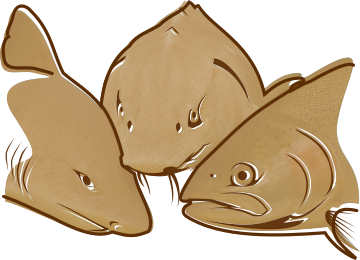
Dr. Stitt is a Title 50 certifying official by the United States (US) export certification process for exports to the US of live finfish (including salmonid species). He has over 15 years experience with Academic and University Animal Care programs (with a speciality in aquatic species), and he works closely with several local aquaculture companies that specialize in the production of West Coast finfish species including wolfeel, sablefish, chinook and trout.
Production Management
Dr. Stitt has worked with flow-through and recirc. aquaculture systems since 2013. He has experience working with Fraser River White Sturgeon, Wolf Eel, Dogfish, Sculpin, Trout, Atlantic Salmon and Chinook Salmon.
Disease Screening
Dr. Stitt works closely with both BC CAHS (Centre for Aquatic Health Sciences) and Animal Health Lab (Ministry of Agriculture) for routine disease screening and disease outbreak investigations.
Outbreak Investigations
Dr. Stitt will work with established clients on outbreak investigations, to help coordinate tissue collection for pathology and disease screening, to interpret laboratory results, and to assist with treatments. Aquaculture facilities who do not yet have access to a veterinarian are encouraged to establish a working relationship with a veterinarian before there is a crisis, as this will help expedite diagnosis and treatment.
Title 50
Dr. Stitt was re-accredited with Title 50 in January 2026. This means he can review and endorse health certificates to accompany the transport of fish and fish gametes into the United States.
Animal Care
Dr. Stitt has worked under contract as an animal care veterinarian for fish and cephalapods for local Universities on Vancouver Island since 2013. He has also assisted the Canadian Council of Animal Care (CCAC) as a community representative when they carry out audits of university animal care programs.